
Goal
Use anatomy-specific finite-element models to simulate tDCS and TMS stimulation of the brain.
Process
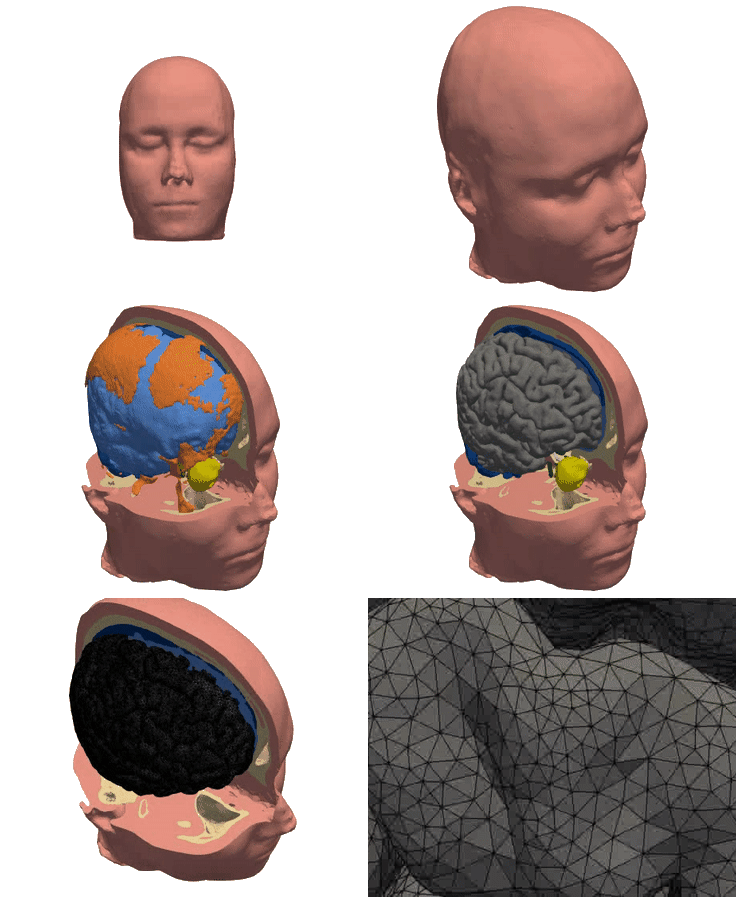
Generate Head Model
Script FEA Simulation
Analyze Results

Project 1: Optimizing Coil Placement
Goal: Determine optimal TMS coil placement to target a certain brain region given a patient's MRI.
Application: Noninvasive treatment of misophonia at Duke Hospital using TMS stimulation.


- Created head meshes (4M+ elements) from patient MRI data
- Programmed patient-specific FEA simulations
- Developed automated pipeline (shell scripting) to determine optimal coil placement and orientation
Project 2: Coil Comparison
Goal: Compare the strength and focality of new, optimized TMS coils to existing ones.
Application: Allow deeper brain regions to be targeted, increasing the number of theraputic applications of noninvasive TMS stimulation.


- Programmed FEA simulations on spherical and realistic brain models
- Developed quantitative metrics to quantify "E-field spread"
- Analyzed results and produced figures for publication
Project 3: Modified Electrode Placement in ECT
Goal: Computationally model the effect of moving bitemporal stimulus electrodes posteriorly by 1 inch on induced electric field in the brain.
Application: Enhance the efficacy of Electroconvulsive Therapy (ECT), increasing seizure duration and/or lowering seizure threshold.


- Collaborated with clinicians at Duke Hospital
- Programmed FEA simulations on realistic brain model
- Compared and visualized data qualitatively and quantitatively